A dog’s hopeful stare can make an empty bowl seem like an emergency. Then come the paw on your knee, the nose near your plate, and one more whine beside the kitchen counter. If you keep asking, “why does my dog beg for food all the time,” the answer may involve learned habits, meal routines, tempting smells, or genuine changes in appetite. Begging alone does not prove your dog is underfed.
Veterinary nutritionist Dr. Lisa Freeman’s guidance is to consider the whole diet and the dog’s body condition, rather than judging hunger from one pleading moment. That means counting treats, table scraps, and training rewards alongside regular meals. Small bites add up. A sudden increase in begging deserves extra attention, especially with weight loss, unusual thirst, vomiting, or changes in energy. Contact your veterinarian if you notice these signs; online advice cannot diagnose the cause.
The pattern may also be partly human-made. A single dropped piece of chicken can teach a dog to wait by the table tomorrow. It is easy to miss that connection. Try recording meal portions, treats, and when begging happens for several days. Keep feeding times steady, reward calm behavior away from the table, and make sure everyone at home follows the same plan. Progress may be uneven. Your dog’s expression can still look convincing, but a consistent routine gives you better evidence than a guilty glance ever will.
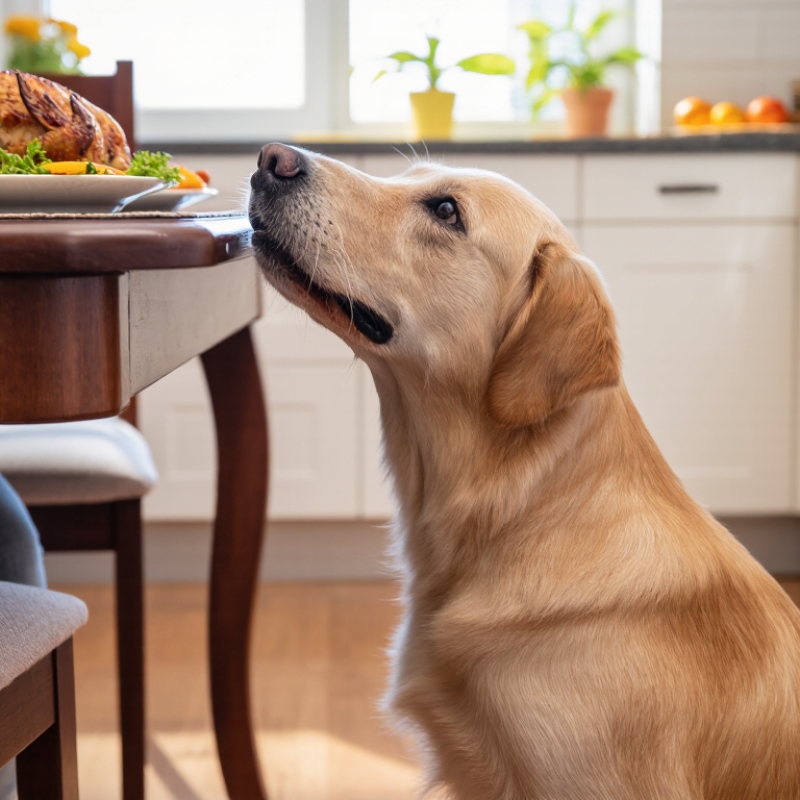
Food begging can be obvious: your dog stares at your plate, paws your knee, or whines beside the table. Some dogs sit very still, watching every forkful. Others circle the kitchen, sniff the counter, or follow you when you open a cupboard. A quick lick of the lips may appear, too. These behaviors can be learned when they sometimes earn a bite, but they do not always mean your dog is hungry.
Look for patterns. Does begging happen only when people eat, or does your dog seem hungry throughout the day? Note changes in appetite, thirst, weight, and energy. A sudden increase in hunger, especially with weight loss or unusual thirst, deserves a call to your veterinarian. Begging alone cannot explain what is happening. And yes, it can be difficult to resist those eyes.
Tips: Keep meals predictable and feed your dog away from the table. Ask everyone at home to follow the same rule; one secret snack can restart the habit. Reward calm behavior with attention or a small portion of their regular food. Check the feeding amount with your veterinarian, since age, activity, and health affect needs. Don’t assume every hungry-looking moment means the portion is too small.
Why Does My Dog Beg for Food All the Time?
Why Dogs Beg for Food So Often
Begging does not always mean a dog is hungry. A nose nudging your knee while you eat may reflect a learned routine: scraps or attention followed earlier begging. Dogs also notice cues, like a cupboard opening or a chair moving toward the table. Repetition makes the pattern hard to miss.
Body condition matters, too. The Association for Pet Obesity Prevention’s 2022 survey estimated that 59% of dogs were overweight or obese. That figure does not explain why an individual dog begs, but it’s a useful reminder that extra snacks can add up. A 2016 study in Science found a POMC gene deletion linked to greater food motivation and body weight in some Labrador retrievers. Not every hungry-looking dog has this variant; the finding applies to a particular breed and gene.
Measure meals rather than topping up the bowl by guesswork. Keep treats small, and count them in the daily amount. A dog may still stare. Honestly, that look can be persuasive. If begging suddenly intensifies, or comes with weight loss, unusual thirst, or other changes, ask a veterinarian to check for medical causes. A feeding diary can help: note meal times, treats, and when the begging starts.
Begging does not always mean a dog needs more food; it can also be a learned behavior. This chart shows estimated resting energy requirement (RER), calculated with the veterinary formula 70 × body weight in kilograms0.75. RER is a baseline estimate, not a daily feeding target—actual needs vary with factors such as age, activity, and health.
A dog that begs at the same hour each day may be responding to routine, not hunger. If family members share scraps, even occasionally, your dog can learn that waiting beside the kitchen works. Measured meals, consistent times, and puzzle feeders can make food less unpredictable. Small cues matter. Keep a simple record of meals, treats, and weight; it can reveal patterns that memory misses.
A sudden appetite increase deserves closer attention, especially with weight loss, unusual thirst, frequent urination, vomiting, or a change in energy. Conditions such as diabetes, intestinal parasites, and some medications can affect appetite. The 2021 AAHA Nutrition and Weight Management Guidelines recommend assessing body condition and tailoring nutrition to the individual animal. That helps distinguish a food-focused habit from a change worth discussing with a veterinarian. A veterinarian can also review portion sizes and health history.
Begging does not prove a dog needs more calories. The Association for Pet Obesity Prevention’s 2022 survey estimated that 59% of U.S. dogs were overweight or obese, underscoring why extra bites count. Still, a survey cannot tell you what one dog needs. I might overlook a small change if I only judge by appetite; tracking body shape and behavior gives a clearer picture.
Persistent begging does not always mean a dog needs more food. Start with the routine. Note meal times, measured portions, treats, and who feeds the dog. A food diary for several days can reveal extra bites that are easy to overlook. Check the feeding guide against your dog’s age, activity, and body condition.
Look for physical changes, too. A sudden rise in appetite, weight loss, increased thirst, or frequent urination deserves a veterinary check. Some illnesses and medications can affect appetite. The 2021 AAHA Nutrition and Weight Management Guidelines recommend reviewing diet history and body condition as part of routine veterinary care. Ask your veterinarian to assess both before changing portions.
Begging can also become a learned habit. If a whine beside the kitchen earns a scrap, the dog may repeat it. Try noting when begging happens and what follows. Keep meals predictable, and reward calm behavior away from the table. Be honest about snacks; estimates are often wrong. The Association for Pet Obesity Prevention’s 2022 U.S. survey found 59% of dogs were overweight or obese, a reminder that persistent begging should not automatically lead to larger servings.
Why Does My Dog Beg for Food All the Time?
Ways to Manage Food Begging Consistently
Begging often grows when a dog learns that staring, pawing, or whining sometimes earns a bite. Keep meal and snack times predictable, and measure the full daily ration rather than estimating by eye. The Association for Pet Obesity Prevention’s 2022 survey estimated that 59% of surveyed dogs in the United States were overweight or obese. That figure does not mean begging causes weight gain, but extra treats can quietly add calories. It takes practice.
Set one household rule: no food from the table, even when those eyes are hard to resist. Offer part of the measured ration for training, or use a food puzzle while the family eats. Teach a mat cue and reward calm settling away from the table. The WSAVA Global Nutrition Guidelines recommend assessing body condition as part of nutritional care, so ask your veterinarian to help check your dog’s weight and portions. Expect setbacks. If begging suddenly intensifies, or comes with weight loss, increased thirst, or other changes, arrange a veterinary visit; appetite shifts can have medical causes. Consistency helps, though an occasional lapse is easy to make—and worth noticing.
| Common reason | Consistent approach | Household rule | Helpful detail |
|---|---|---|---|
| Begging has been rewarded before | Do not give food in response to pawing, whining, staring, or barking. Reward calm behavior away from the table instead. | Everyone follows the same rule: no treats from the table or while the dog is begging. | Even occasional food rewards can keep begging going. The behavior may briefly become more persistent when rewards stop. |
| The dog is near people and food during meals | Set up a bed, mat, or gated resting area before the meal. Reward the dog for staying settled there. | Use the same place and cue at each meal, and keep food out of reach. | Practicing a specific alternative behavior gives the dog something clear to do instead of approaching the table. |
| The dog is bored or needs an activity | Offer a suitable food puzzle or a portion of the dog’s measured meal in a slow feeder. | Count puzzle food and training rewards as part of the daily food allowance. | Choose an item that is appropriate for the dog’s size and chewing habits, and supervise when needed. |
| Feeding times or portions vary | Use a predictable feeding routine and measure meals with an appropriate measuring tool. | Agree on portions and meal times; avoid adding extra food just because the dog asks. | Food needs vary with factors such as age, activity, health, and body condition. Ask a veterinarian about an appropriate amount. |
| Treats add up during the day | Plan treats in advance and use small pieces for training rather than repeatedly handing out snacks. | Track treats given by each household member and keep them within the dog’s daily feeding plan. | Frequent extras can increase overall calorie intake, even when each treat seems small. |
| A change in appetite or health | Note when the change began and whether there are other changes in weight, thirst, urination, digestion, or behavior. | Contact a veterinarian if hunger is new, unusually intense, persistent, or accompanied by other symptoms. | A sudden appetite change can have medical or medication-related causes; training alone may not address it. |
Consistency matters: reward the behavior you want, keep table food unavailable, and make sure every person in the household follows the same plan.
No. A dog may beg because it expects food at a familiar time. Routine matters.
Record meals, treats, portions, and who feeds your dog for several days. Small bites count.
Yes. If whining by the kitchen sometimes earns a scrap, your dog may repeat that behavior.
Seek advice if appetite suddenly rises alongside weight loss, unusual thirst, frequent urination, vomiting, or low energy.
Yes. Some illnesses and medications can affect appetite. A veterinarian can review your dog’s health history.
Not automatically. Check measured portions against your dog’s age, activity, and body condition with a veterinarian.
Serve measured meals at consistent times. A puzzle feeder may give your dog a useful activity.
Note when begging happens and what follows. Reward calm behavior away from the table; I may still miss a snack now and then.
Food begging can include staring, whining, pawing, following family members, or hovering near the table whenever food appears. If you wonder, “why does my dog beg for food all the time,” the behavior may be driven by more than hunger. Dogs can learn that begging earns treats or scraps, and irregular feeding schedules, boredom, or attention from people may reinforce it. Some dogs also seem especially eager around food because of their age, activity level, or individual temperament.
Changes in appetite can sometimes be related to health, so persistent or sudden begging is worth discussing with a veterinarian, especially if it comes with weight changes, increased thirst, or other unusual signs. To identify likely causes, keep track of meal times, treats, activity, and changes in behavior. Manage begging consistently by serving measured meals on a routine, avoiding food from the table, and rewarding calm behavior instead. Make sure everyone in the household follows the same rules, and offer enrichment or appropriate activities so food is not the only source of stimulation.

Nill Paws