Can wet food replace dry food completely? For many cats and dogs, it can, provided the chosen food is complete and balanced for the animal’s life stage. Wet food adds moisture and may be easier for some pets to chew. Yet the label matters more than the texture. A wet food intended only for occasional feeding may not supply everything a pet needs as its sole diet.
Veterinary nutritionist Dr. Lisa Freeman’s guidance can be paraphrased this way: “Choose a nutritionally complete diet for the individual pet, not for its format alone.” That distinction is central to a safe switch. Check the feeding statement, compare calories per can with the current daily ration, and ask your veterinarian about medical conditions or special dietary needs. Cans can contain fewer calories by volume, but portions still need measuring. Small details count.
The change itself is rarely perfect. Mix increasing amounts of wet food into the familiar dry food over several days, or longer if your pet has a sensitive stomach. Watch appetite, stool, and energy. A bowl left untouched is useful information, not misbehavior. If vomiting, persistent diarrhea, or refusal to eat occurs, pause and seek veterinary advice. Some pets adapt quickly. Others do not. This article explains how to plan the transition, choose an appropriate wet diet, and decide whether an all-wet routine suits your pet. It also considers practical realities, such as storage, cost, and feeding schedules—because the best plan is one your household can sustain.
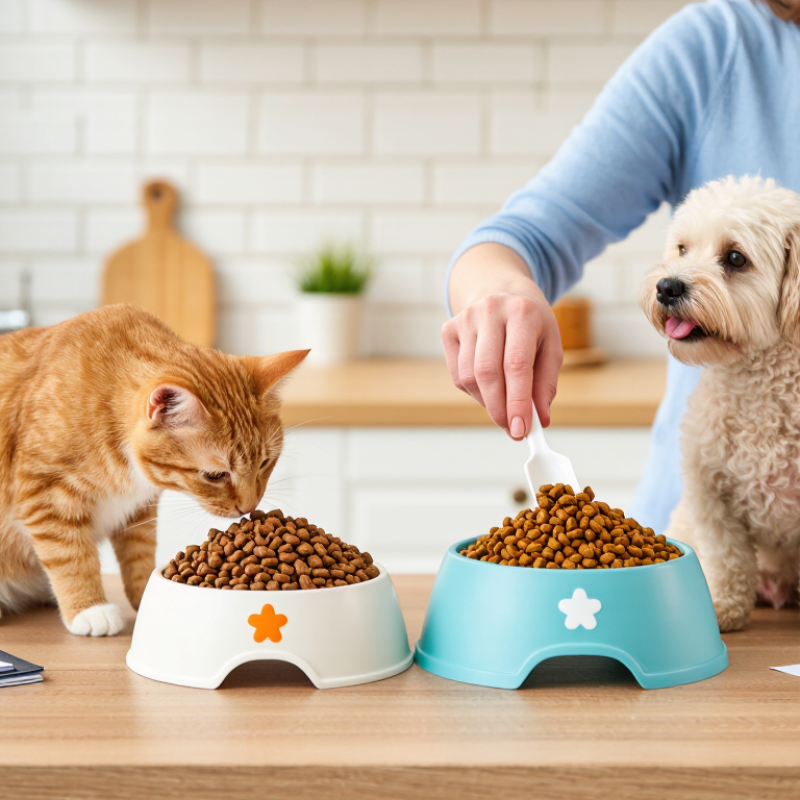
Compare Moisture Levels: Canned Food Is Typically 75–80% Water
Canned food usually contains 75–80% water, compared with roughly 10% in dry food, according to the Pet Food Institute’s wet-pet-food guidance. That difference is easy to see: in a 100-gram portion, about 75–80 grams may be water. The remaining nutrients are packed into much less weight. A bowl of wet food can therefore look generous while providing fewer calories than the same weight of kibble. Check the feeding guide and calorie statement, not just the bowl’s appearance.
More moisture can help increase water intake through meals, but it does not make every diet suitable for every pet. The National Research Council’s Nutrient Requirements of Dogs and Cats explains that water needs vary with factors such as diet, activity, and environment. Watch your pet’s drinking habits, urine output, and appetite during a change. Small details matter. A cat may lick the gravy and leave the chunks; a dog may eat more slowly than expected.
For a complete switch, introduce wet food gradually over several days, adjusting portions to keep daily calories appropriate. Recheck the package’s nutrition and feeding information, since moisture changes how much food is needed by weight. The arithmetic helps, but it is not the whole story. Pets with kidney, urinary, or digestive conditions may need individualized advice from a veterinarian before their diet changes.
Check AAFCO Nutritional Adequacy and Calories per Can Before Switching
Before replacing kibble, check the can’s nutritional adequacy statement—not just its ingredient list. AAFCO’s Official Publication sets nutrient profiles by species and life stage, and the label should say whether the food is complete and balanced for your pet’s needs. A product labeled for supplemental feeding alone is not a suitable sole diet. Check the life-stage wording carefully. “For adult maintenance” does not mean it is formulated for growing puppies or kittens.
Then compare calories per can with your pet’s current daily intake. FDA labeling guidance calls for calorie content in familiar units, such as kcal per can, alongside kcal per kilogram. That number makes portion planning easier: divide the daily calorie target by the can’s calories, then adjust for treats and other food. The WSAVA Global Nutrition Guidelines give a starting estimate for resting energy needs: 70 × body weight in kilograms to the 0.75 power. It is only an estimate; age, activity, body condition, and health can change actual needs. Small cans vary. Weighing portions helps.
During the change, record how much food goes into the bowl and what remains. Watch body weight, stool, and appetite over the following weeks, and ask a veterinarian to review the plan if your pet has a medical condition. I would not assume that a “complete and balanced” statement guarantees the right calorie portion. It confirms nutritional adequacy for a stated life stage, not an individual feeding amount. Sources: AAFCO Official Publication; FDA, “Pet Food Labels—General”; WSAVA Global Nutrition Guidelines.
Replace Dry Food Gradually Over 7–10 Days to Support Digestive Adjustment
How to Replace Dry Food With Wet Food Completely?
Replace Dry Food Gradually Over 7–10 Days to Support Digestive Adjustment
A sudden switch can upset a cat’s stomach or make meals feel unfamiliar. Over 7–10 days, mix a small amount of wet food into the usual dry food, then increase it every two or three days. For example, begin with roughly one part wet food to three parts dry food. If your cat eats comfortably, move toward equal portions, then mostly wet food. Keep meals measured; wet food contains more moisture and may differ in calories by weight. Check the feeding guide and ask your veterinarian for advice, especially if your cat has a health condition.
Watch your cat’s appetite and litter box each day. Soft stool, vomiting, or skipped meals may mean the pace is too fast, though other causes are possible. Pause at the current ratio for a few days, or return to the last amount your cat tolerated. Contact a veterinarian if symptoms persist, worsen, or your cat seems unwell. Some cats need longer than ten days. It can feel slow, but pushing ahead is not always helpful.
Tips: Serve wet food at room temperature in a clean, shallow dish. Offer small portions and refrigerate leftovers promptly.
How to Replace Dry Food With Wet Food Completely? — Replace Dry Food Gradually Over 7–10 Days to Support Digestive Adjustment
| Transition period |
Daily calories from current dry food |
Daily calories from new wet food |
Feeding guidance |
| Days 1–2 |
About 75% |
About 25% |
Introduce a small portion of the wet food and mix it with the usual food, or serve it separately if preferred. |
| Days 3–4 |
About 50% |
About 50% |
If your pet is eating comfortably and stools remain normal, increase the wet-food share gradually. |
| Days 5–7 |
About 25% |
About 75% |
Continue monitoring appetite, stool consistency, and any signs of digestive upset. |
| Days 8–10 |
0% |
About 100% |
Complete the switch if your pet is tolerating the new food well and the food is suitable as a complete diet. |
Important: Use the foods’ calorie information to work out portions; wet and dry foods can provide very different calories per gram or serving. Keep the total daily calories appropriate for your pet, provide fresh water, and slow the transition if digestive changes occur. Ask a veterinarian for guidance if symptoms are persistent or severe, or if your pet has a medical condition or a prescribed diet.
Adjust Wet-Food Portions by Calories, Not by Volume
When replacing dry food with wet food, match calories rather than matching scoops or bowl volume. Wet food contains much more water, so a full-looking dish may provide fewer calories than the same volume of kibble. Water changes the math. Check the package for kilocalories per can, pouch, or gram, then compare that figure with the calories your pet currently eats each day. Feeding charts offer a starting point, not a precise prescription.
For example, if your cat eats 200 calories from dry food, the wet portion should supply roughly 200 calories before treats are counted. Divide the daily target by the wet food’s calories per can to estimate the amount. If one can contains 100 calories, that is two cans—not necessarily two cups. Use a kitchen scale when the serving size is listed by weight. It is easy to misjudge portions by eye.
Transition gradually over several days, adjusting the mix while watching appetite, stool, and body weight. A simple note on the fridge can help track what was served. I would not treat a package chart as unquestionable; activity, age, and health can change calorie needs. Ask a veterinarian for an individualized target, especially for pets with medical conditions or unexplained weight changes.
Monitor Appetite, Stool, Weight, and Hydration During the Complete Switch
During a complete switch, record how much food your pet eats each day, rather than judging by an empty-looking bowl. AAFCO’s Model Regulations define high-moisture pet food as containing more than 78% moisture. That extra water can change urine output, so note drinking and bathroom habits too. Check litter clumps or outdoor urination, and keep fresh water available. Small changes matter.
Weigh your pet weekly on the same scale, at a similar time of day. A gradual downward trend deserves attention, even if appetite seems normal. Check stools daily: a brief change may happen during a diet transition, but ongoing diarrhea, vomiting, or straining warrants veterinary advice. One unusual stool is not a diagnosis.
Keep a simple log; it is easy to misremember what happened two days ago. If your pet repeatedly refuses meals or seems unusually tired, contact a veterinarian rather than waiting for the switch to settle. AAFCO’s moisture figure describes food composition, not an individual pet’s hydration needs, so use changes in eating, weight, stool, and urination together.
Conclusion
Can wet food replace dry food completely? Yes, provided the food is nutritionally complete and appropriate for your pet’s needs. Canned food typically contains about 75–80% water, so it can contribute more moisture to the diet. Before switching, check the nutritional adequacy statement and calories per can; wet food portions should be based on calorie needs rather than the size or volume of the serving.
Make the change gradually over 7–10 days, increasing the wet food while reducing the dry food to give your pet’s digestion time to adjust. Once the transition is complete, monitor appetite, stool quality, body weight, and hydration. If your pet has ongoing digestive issues, changes in appetite, or special dietary needs, consult a veterinarian for guidance.

 Nill Paws