Overeating can begin with a small extra scoop, a shared snack, or a bowl left full all day. Those moments seem harmless, yet they can quietly increase body fat, begging, and joint strain. Cats and dogs may also eat too quickly, especially when food feels scarce or another pet is nearby.
This guide explains how to prevent overeating in pets through practical, evidence-informed habits. You will learn how measured portions, consistent meal times, and careful treat choices can support a healthier routine. A kitchen scale may help, because “one handful” rarely means the same amount twice. Food labels matter too, but calorie needs still vary with age, breed, activity, and health status.
Watch the body, not only the bowl. A veterinarian can assess body condition, muscle, dental health, and possible medical causes of unusual hunger. Some pets need gradual diet changes, while others need enrichment, slower feeders, or separate feeding spaces. Small changes matter.
Perfect consistency is unrealistic. I sometimes see owners focus on food while overlooking stress, boredom, or reduced exercise. That reflection matters, because weight management involves daily behavior, not one dramatic fix. Tracking meals for a week can reveal patterns, including treats given by several family members. The following ten tips offer clear steps, but they should complement professional veterinary guidance rather than replace it.
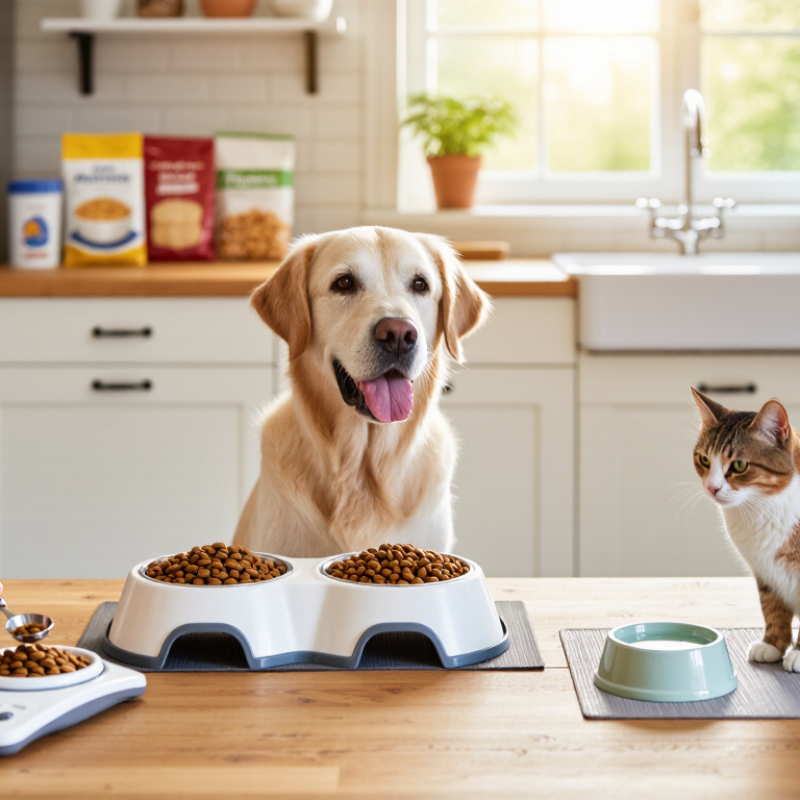
10 Tips to Prevent Overeating in Pets
Understanding the Causes and Risks of Overeating in Pets
Overeating rarely begins with one large meal. It often develops through extra treats, measured portions, and food left available all day. Multiple family members may feed the same pet without realizing it. Boredom, anxiety, and competition between animals can also encourage fast eating. Some medical conditions increase hunger, so sudden appetite changes deserve veterinary attention.
The risks are serious. Excess weight can strain joints, worsen breathing, and reduce daily activity. Dogs may face higher risks of diabetes or pancreatitis. Cats can develop obesity-related diabetes and may struggle with grooming. Even a few extra bites matter for a small animal. It is easy to assume a begging pet is truly hungry. That assumption can be wrong.
Tips: Measure each meal with a kitchen scale or standard cup. Count treats within the daily calorie allowance. Use puzzle feeders for pets that eat too quickly. Keep feeding notes when several people share care. Weigh your pet regularly, and ask a veterinarian to assess body condition. Avoid sudden diet changes unless medically advised. My own reflection is simple: careful owners still miscount occasional snacks. Record them honestly. If weight rises, review portions, activity, and possible health problems rather than blaming the pet.
10 Tips to Prevent Overeating in Pets?
Measuring Appropriate Portions for Your Pet’s Needs
Overeating often begins with a generous scoop, not a hungry pet. Portion size should reflect species, age, weight, activity, and health status. A growing puppy, indoor cat, and working dog cannot share one feeding rule. Use a kitchen scale when possible. It is more consistent than guessing by eye. Follow feeding guidance as a starting point, not a prescription.
Record your pet’s current weight and body condition. You should feel the ribs under a thin layer of fat, while the waist remains visible from above. Weigh dry food in grams, especially when calorie levels differ. Divide the daily amount into measured meals. Treats, chews, and table scraps count too. Keep them near 10 percent of daily calories unless your veterinarian advises otherwise. Fresh water should always be available.
Adjust portions slowly after observing weight for two to three weeks. If the waist disappears or the bowl stays empty, do not automatically add food. Hunger may reflect habit, boredom, or a medical problem. Ask a veterinarian before changing portions for a pregnant, elderly, underweight, or chronically ill pet. Measuring has helped me, but my first estimates were not perfect. Activity changes, and feeding labels can confuse. Recheck the scale and your notes.
| No. | Practical Tip | Portion Guidance | Example or Measurement | Why It Helps Prevent Overeating |
|---|---|---|---|---|
| 1 | Measure every meal | Use a standard measuring cup for volume or, preferably, a kitchen scale for grams. | Measure the daily ration before dividing it into meals. | Eyeballing food can produce substantially different portions from one meal to the next. |
| 2 | Calculate a starting calorie target | A commonly used estimate for resting energy requirement is RER = 70 × body weight0.75, with weight in kilograms. | For a 10 kg adult dog: RER ≈ 394 kcal/day. A neutered adult may initially need about 1.6 × RER, or approximately 630 kcal/day. | Energy needs vary by age, activity, reproductive status, health, and body condition, so the result is only a starting estimate. |
| 3 | Read the food’s calorie information | Compare the daily calorie target with the food’s metabolizable energy, usually listed as kcal per cup, can, pouch, or kilogram. | If the food contains 400 kcal per cup and the target is 600 kcal/day, the daily amount is 1.5 cups before treats. | Different foods can provide very different calories in the same volume. |
| 4 | Divide the daily ration into scheduled meals | Most adult dogs and cats do well with two measured meals; some pets may benefit from smaller, more frequent meals. | A 600 kcal daily allowance can be divided into two 300 kcal meals. | A consistent schedule reduces repeated requests for food and makes intake easier to monitor. |
| 5 | Include treats in the daily calorie budget | Keep treats and other extras to about 10% or less of daily calories unless a veterinarian recommends otherwise. | For a 600 kcal daily target, limit treats to about 60 kcal and reserve about 540 kcal for complete meals. | Small snacks can add significant calories when they are not counted. |
| 6 | Use part of the meal as training rewards | Set aside a portion of the regular daily food before training instead of adding extra calories. | Reserve 10% of the day’s measured kibble for reward-based training. | The pet receives rewards without exceeding the planned daily intake. |
| 7 | Slow down fast eaters | Use a suitable puzzle feeder, slow-feeder bowl, food-dispensing toy, or several small feeding locations. | Keep the total daily portion unchanged while extending feeding time. | Slower eating can reduce food gulping and provides mental enrichment without adding calories. |
| 8 | Monitor body condition, not appetite alone | Healthy body condition generally includes ribs that can be felt under a light covering of fat and a visible waist when viewed from above. | Check body shape monthly and record body weight under similar conditions. | A pet’s appetite may remain high even when its calorie intake is already excessive. |
| 9 | Adjust portions gradually | Review the portion if weight or body condition changes, but avoid abrupt changes unless directed by a veterinarian. | Reassess after approximately 2–4 weeks, or sooner if there is rapid weight change. | Regular reassessment accounts for changes in activity, metabolism, and life stage. |
| 10 | Ask a veterinarian about special needs | Obtain individualized guidance for puppies, kittens, senior pets, pregnant or nursing animals, overweight pets, and pets with medical conditions. | Use a veterinary weight-management plan when weight loss, diabetes, digestive disease, or medication-related appetite changes are involved. | Generic formulas cannot fully account for every pet’s health status and nutritional requirements. |
| Important note: Calorie formulas and portion examples are general starting points, not a diagnosis or a substitute for veterinary advice. Always consider the calorie content of treats, table food, supplements, and dental chews when planning a pet’s daily intake. | ||||
A consistent feeding schedule can curb overeating by making meals predictable. Many adult pets do well with two measured meals, such as 7 a.m. and 6 p.m. Puppies, kittens, and pets with medical conditions may need different timing. Ask a veterinarian for guidance before changing their routine. Do not leave a full bowl available all day unless a professional recommends it.
Measure each portion with a kitchen scale or standard measuring cup. Keep the scoop beside the food container. Feed pets separately if one steals another’s meal. A quiet corner can reduce rushed eating. Puzzle feeders may slow meals, but introduce them gradually. Remove uneaten food after a reasonable period. Fresh water should remain available.
Track meals, treats, and body changes for two weeks. Treats should come from the daily food allowance, not sit on top of it. If your pet begs between meals, offer play, grooming, or a short walk before adding food. I once mistook persistent begging for hunger. A simple log showed boredom was the real trigger. Still, schedules are not perfect. Appetite, activity, age, and illness can change. Recheck portions when your pet gains weight, leaves food behind, or becomes unusually hungry. A veterinarian can assess body condition and adjust calories safely.
Overeating in pets often begins with kindness. One extra biscuit becomes three. According to the Association for Pet Obesity Prevention, about 59% of dogs and 61% of cats were overweight or obese in its 2022 survey. This matters because excess weight can increase joint strain, diabetes risk, and breathing problems. Healthy treats should support training, not replace balanced meals.
Veterinary nutrition guidance from the World Small Animal Veterinary Association recommends keeping treats below 10% of daily calories. Measure them, even when they look tiny. A small piece of cooked lean meat, a few pieces of the daily kibble, or a low-calorie vegetable may work well, depending on the animal. Check with a veterinarian before changing food for pets with medical conditions. Labels can mislead. “Natural” does not automatically mean low-calorie.
Enrichment makes food more interesting without simply adding more food. Use a slow feeder, scatter measured kibble across a safe room, or place portions inside a suitable puzzle toy. Rotate activities, because novelty keeps many pets engaged. A ten-minute sniffing walk may tire a dog more safely than another snack. Cats may enjoy chasing a feather toy before receiving their measured dinner. I have seen owners forget to count training treats. I have made that mistake too. Record every extra bite for one week, then adjust portions with professional guidance. Some pets still beg. Begging is communication, not proof of hunger.
Preventing overeating begins with careful monitoring, not guesswork. Weigh your pet weekly at the same time, using a household scale for small animals or a clinic scale for larger pets. Record the number, meal portions, treats, activity, and unusual behavior. A rising trend matters more than one reading.
Check your pet’s body condition regularly. You should feel the ribs beneath a thin layer of fat, but they should not be sharply visible. Measure every meal with a standard cup or kitchen scale. Divide food into scheduled portions, remove leftovers, and count treats as part of the daily intake. A slow-feeding bowl can help pets that finish meals in seconds. Watch for persistent begging, food stealing, tiredness, or reduced play. Behavior often changes before weight becomes obvious. Still, signs can be easy to miss.
Monitor feeding progress for two or three weeks after any portion change. If weight continues rising, reduce calories only with professional guidance. A veterinarian can assess body condition, medical causes, and safe weight-loss speed. Avoid sudden restrictions. They may cause stress or nutritional gaps. Keep exercise realistic, such as two extra five-minute play sessions. Note appetite changes, stool quality, and energy in a simple diary. Even careful owners miss a weigh-in sometimes. Restart the routine the next day. Progress is rarely perfectly linear.
Many adult pets do well with two measured meals. For example, serve breakfast at 7 a.m. and dinner at 6 p.m. Puppies, kittens, and pets with medical conditions may need different schedules. Ask a veterinarian before changing timing.
Usually, no. Continuous access can encourage overeating. Leave a measured portion instead. Remove uneaten food after a reasonable period. Fresh water should always remain available.
Use a kitchen scale or standard measuring cup. Keep the measuring tool beside the food container. Scooping by eye is unreliable. I have done it, and portions quietly grew.
Feed pets in separate spaces. A quiet corner can reduce rushed eating. Watch each meal until eating finishes. This also reveals who actually ate the food.
Keep treats below 10% of daily calories. Count every biscuit, training reward, and extra bite. Use some daily kibble for training. “Natural” does not automatically mean low-calorie.
Try play, grooming, or a short walk before adding food. Puzzle feeders and slow feeders can make meals last longer. Introduce them gradually. A ten-minute sniffing walk may replace one unnecessary snack.
Begging is communication, not proof of hunger. Track meals, treats, activity, and behavior for two weeks. My own log once showed boredom, not hunger. Still, persistent begging deserves attention.
Weigh your pet weekly at the same time. Record portions, treats, activity, and unusual behavior. You should feel the ribs under a thin fat layer. Rising trends matter more than one reading.
Recheck portions and record changes for two or three weeks. Do not suddenly restrict food. A veterinarian can assess medical causes and safe calorie adjustments. I sometimes miss a weigh-in, but restarting tomorrow still helps.
Overeating can cause obesity, digestive discomfort, reduced mobility, and long-term health problems in pets. This guide explains how to prevent overeating in pets by first recognizing common causes, such as oversized portions, frequent treats, boredom, and inconsistent routines. Pet owners can learn to measure meals according to an animal’s size, age, activity level, and individual needs rather than relying on guesswork.
A consistent feeding schedule helps pets develop healthy expectations and reduces unnecessary begging. Treats should be offered sparingly, with nutritious options included in the daily calorie allowance. Enrichment activities, including play, training, and food puzzles, can provide mental stimulation without encouraging excessive eating. Finally, regularly monitoring weight, body condition, behavior, and feeding progress allows owners to adjust portions and routines early, helping pets maintain a healthy weight and a happier, more active lifestyle.

Nill Paws